10–24s
Average completion
85 to 90%
Average completion
0 Docs
ID photos or uploads required
Why platforms choose
biometric age estimation
Deliver the ultimate balance between account security and seamless user experience. Here is why businesses double their onboarding conversion rates compared to legacy ID verification.
Four steps to instant
age verification
A frictionless flow engineered for speed and simplicity from the user perspective.
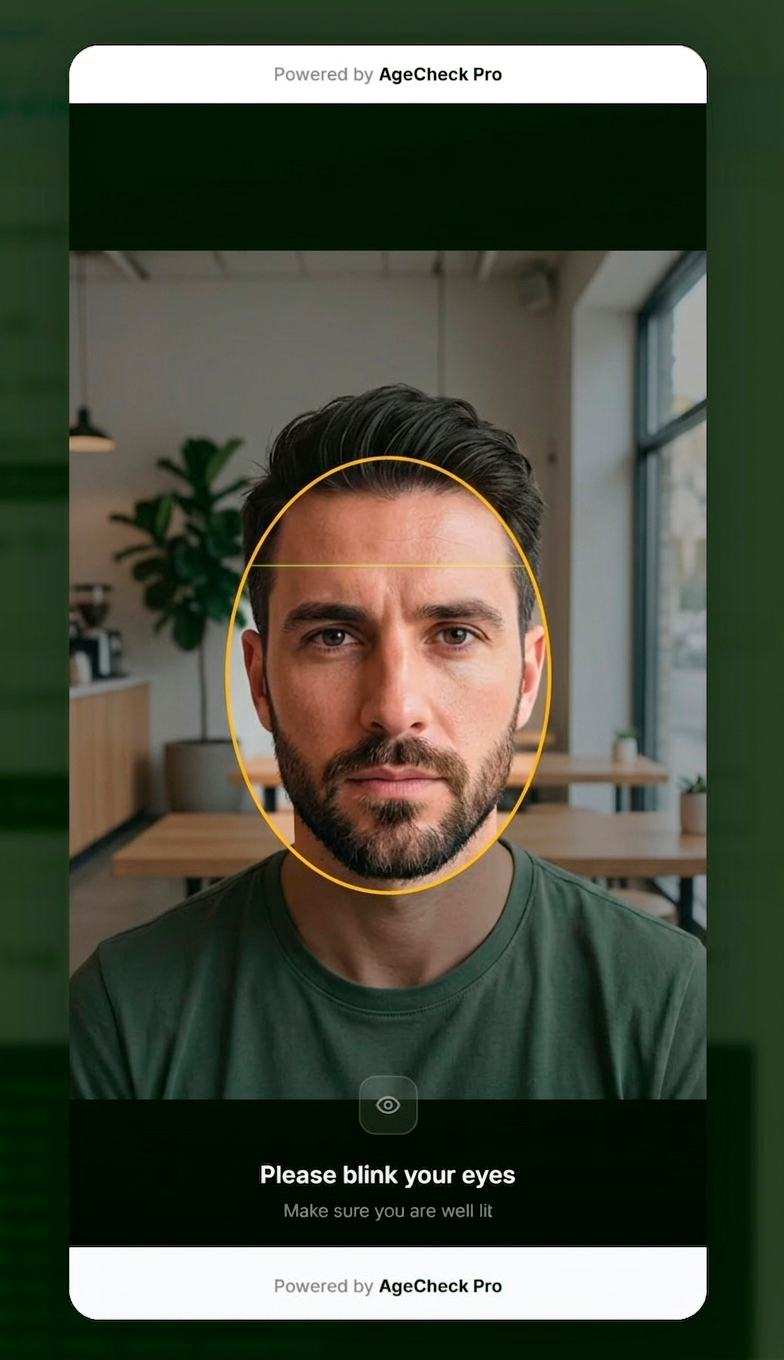
Integrated active
liveness detection
Instead of relying on static photos, our solution incorporates AWS Liveness detection directly into the verification flow.
Simple micro gestures complete in under 24 seconds on any camera-enabled device without installing extra apps.
Liveness sensitivity levels are fully configurable, allowing you to tailor the exact balance between user experience and platform risk management.
POWERED BY COMPUTER VISION ENGINES

Frictionless
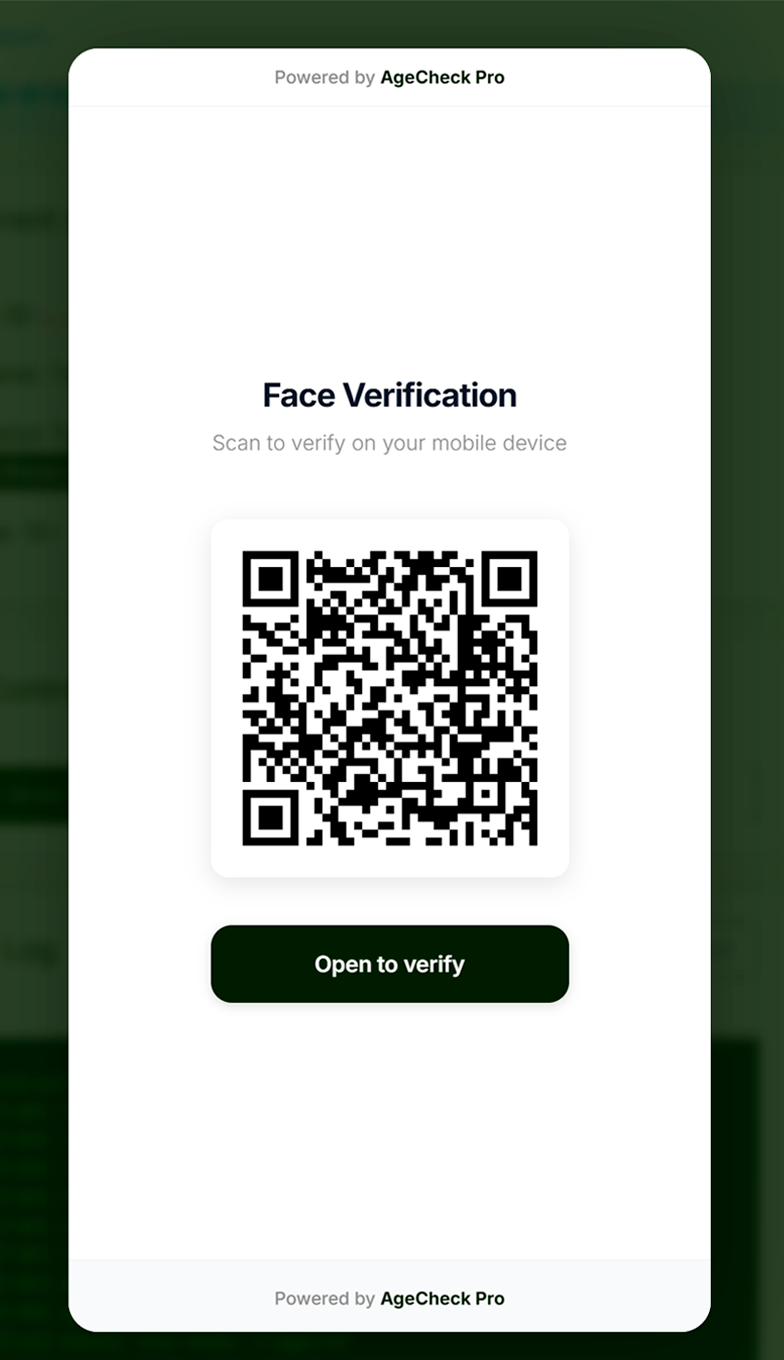
desktop-to-mobile QR handoff
When desktop webcams are unavailable or users prefer not to grant desktop browser permissions, our SDK automatically generates a single-use session QR code.
Scanning the code opens an optimized mobile interface to complete the liveness gesture. Once verified, real-time WebSockets instantly update the desktop browser screen without page reloads.
QR codes expire automatically after 5 minutes and run through encrypted, session-scoped WebSocket channels for total transaction security.
Privacy-first architecture
Zero biometric data stored
Our solution is engineered for ephemeral processing. Video frames are analyzed in temporary memory and immediately discarded. No biometric databases, templates, or facial images are ever retained.
Where biometric age estimation performs best
Ideal for high-volume digital channels where user onboarding speed and conversion directly dictate bottom-line growth.
Explore our range of
verification methods
AI Age Estimation delivers speed and high conversion. Compare our full product suite to select the ideal assurance level for your platform.
Need guidance selecting the optimal verification model for your platform? Contact our technical team for assistance.
Contact sales