Full identity verification.
KYC/AML compliance.
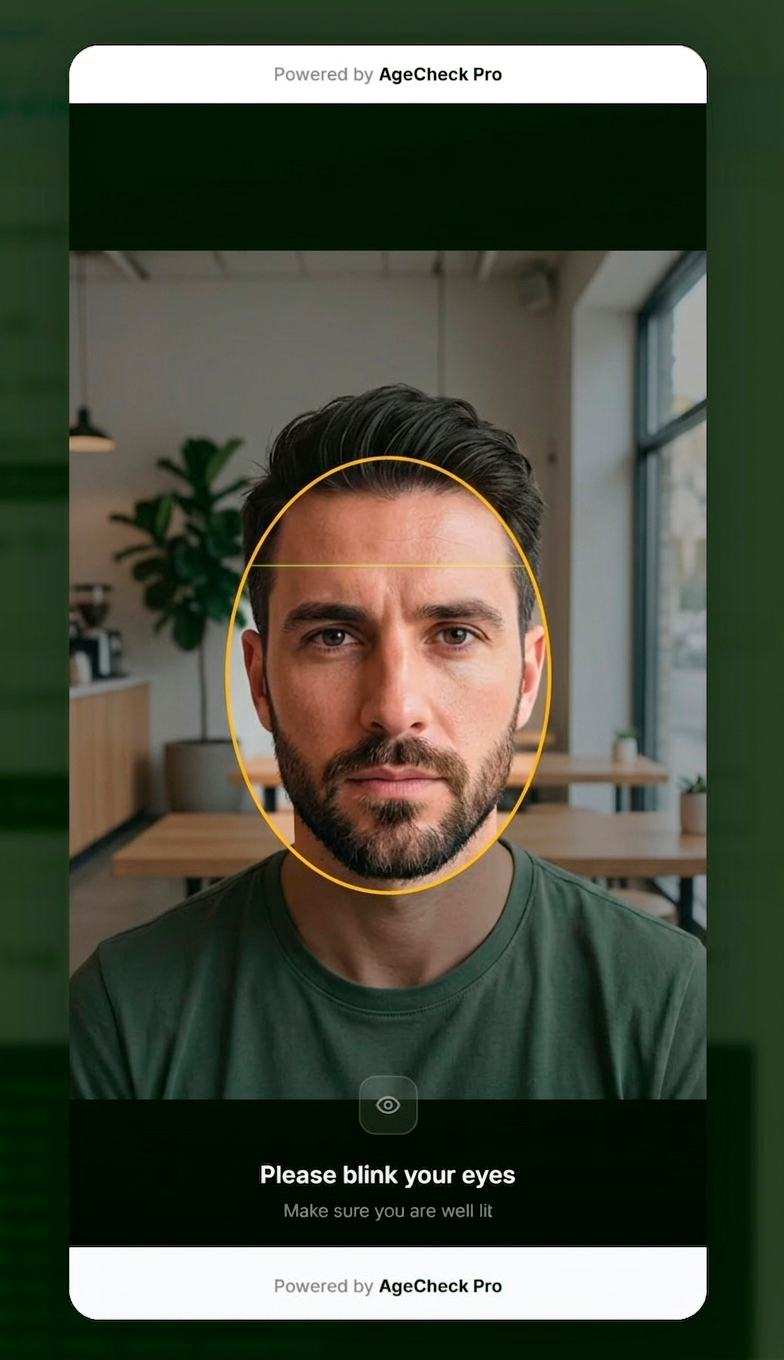
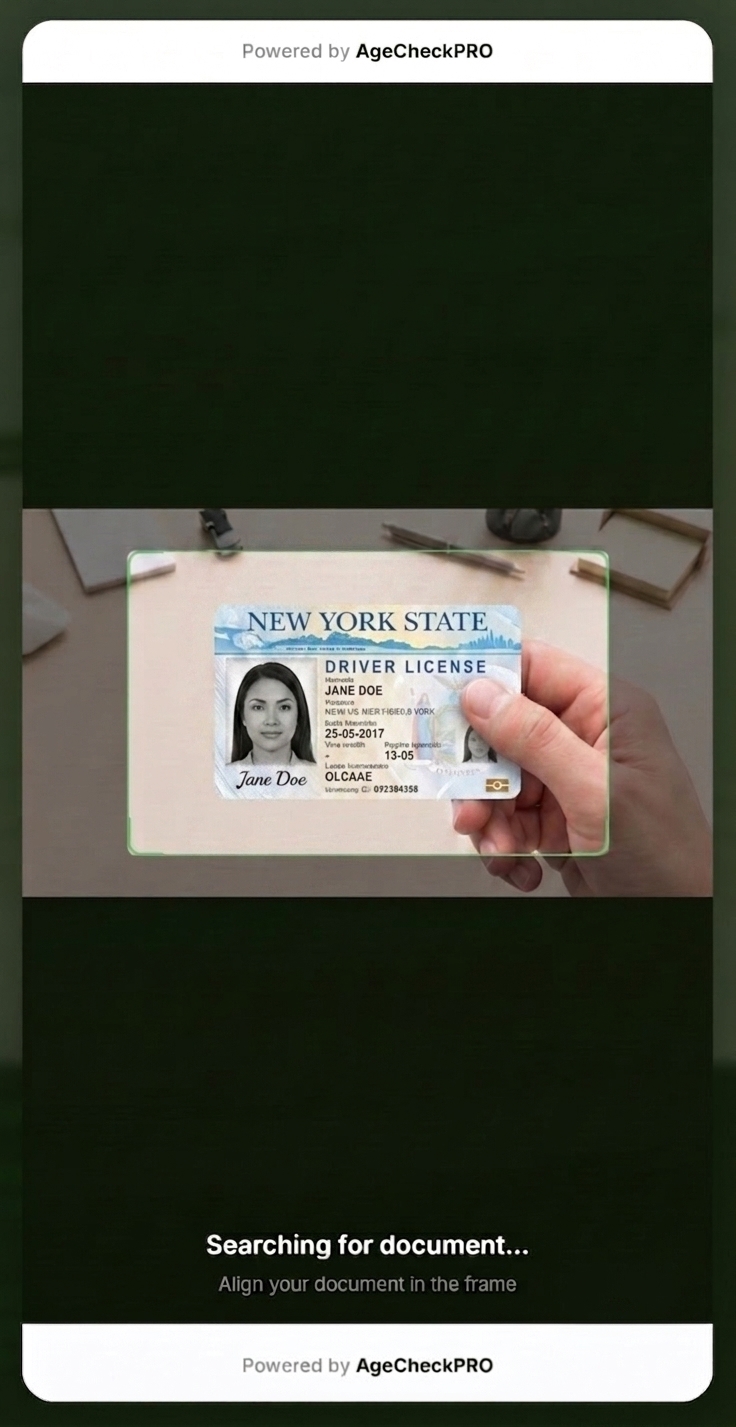
Triple-layer verification combining facial biometrics, document authentication, and live face matching. Verify-AI confirms the person presenting an ID is the legitimate document holder
Complete KYC in
four phases.
Why Verify-AI stops
identity fraud.
Single-layer verification methods leave gaps attackers exploit. Verify-AI combines three independent verification technologies to create a complete identity assurance system that satisfies regulatory requirements while blocking fraudulent attempts.
Biometric face matching
explained simply.
Facial recognition for identity verification works differently than facial recognition for unlocking your phone. Phone unlock systems create a biometric template stored on your device and compare new images against that template. Verify-AI performs a one-time comparison between two images without creating persistent templates.
During verification, the system captures a live face from the liveness challenges and extracts a face from the uploaded ID document photo. Both faces are converted into numerical representations called facial embeddings — arrays of numbers describing the geometric relationships between facial features.
The embeddings are compared using cosine similarity algorithms that calculate the angular distance between the two vectors. A similarity score from 0-100% is produced. Scores above 90% indicate the same person with high confidence. Scores below 70% suggest different individuals. The 70-90% range triggers manual review.
Importantly, both the live image and document photo are deleted immediately after comparison. Only the similarity score and verification outcome are stored in audit logs. This ephemeral processing architecture means Verify-AI doesn't maintain a biometric database of faces — each verification is stateless and privacy-preserving.
Document authentication
stops fake IDs.
Document verification alone isn't enough — attackers can create convincing fake IDs or alter legitimate documents. Verify-AI's document authentication layer analyzes dozens of fraud signals to detect tampering, forgery, and sophisticated document manipulation.
Photo substitution is detected by analyzing the edges around portrait areas. Genuine ID photos are printed or embedded during card production with smooth, consistent edges. Swapped photos show telltale artifacts: color mismatches, edge pixelation, or subtle shadows that don't match the original lighting. The AI has seen millions of genuine documents and recognizes these anomalies instantly.
Text manipulation is caught through font analysis. Government IDs use specific fonts, character spacing, and text alignment. When someone edits a date of birth or name using photo editing software, micro-inconsistencies appear: slight font weight differences, imperfect kerning, color variations. The system compares extracted text against known templates for each document type and flags deviations.
Expired documents are automatically rejected through date validation. Template matching verifies the submitted document matches the expected format for that document type and issuing region — a California driver's license from 2023 should match the known California DMV template for that year. Screen detection identifies when someone photographs a digital image of an ID rather than the physical card.
All fraud signals are weighted and combined into a 0-100% authenticity score. Documents scoring below configurable thresholds are automatically rejected. Mid-range scores can route to manual review queues where human operators examine flagged documents with fraud detection annotations highlighting suspicious areas.
KYC/AML audit trail
meets regulatory standards.
Verify-AI creates immutable verification records satisfying Know Your Customer (KYC) and Anti-Money Laundering (AML) requirements for financial services, online gambling, cryptocurrency exchanges, and other regulated industries.
When simpler methods
are sufficient.
Verify-AI represents the maximum assurance level in age and identity verification. This comprehensive approach requires users to complete multiple steps: liveness challenges, document upload, biometric matching. The process takes 45-90 seconds depending on user familiarity and document accessibility.
For platforms where legal requirements don't mandate full KYC, this friction may harm conversion rates unnecessarily. If you're not subject to financial regulations, gambling licenses, or AML obligations, Face-AI or Document-AI alone may provide adequate age assurance with significantly higher completion rates.
Face-AI completes in 10 seconds with 85-90% conversion. Document-AI takes 30-45 seconds with 60-75% conversion. Verify-AI requires 60-90 seconds with 40-60% conversion. This trade-off matters: for a gaming platform verifying age for M-rated content, the 30-40 percentage point conversion loss from Verify-AI versus Face-AI directly impacts revenue without providing legally required benefits.
The biometric face matching also adds privacy considerations beyond simple age verification. While Verify-AI deletes images after matching, some users are uncomfortable with facial recognition technology even for temporary processing. In markets with heightened privacy sensitivity, offering Face-AI or Document-AI as primary options with Verify-AI available for high-risk scenarios balances assurance with user autonomy.
Explore other
verification methods.
Verify-AI delivers maximum identity assurance with full KYC compliance, but not all platforms require this level of verification. Compare all four methods to balance regulatory requirements with user experience optimization.
Need guidance selecting the right verification approach? Our compliance specialists can assess your regulatory requirements, industry vertical, and user demographics to recommend the optimal solution.
Schedule consultationThe minimum similarity score required between the live face captured during verification and the document photo. Configurable from 70-95% to balance security requirements with false rejection rates based on your risk tolerance.