Age consent
button
Self-Consent age gate
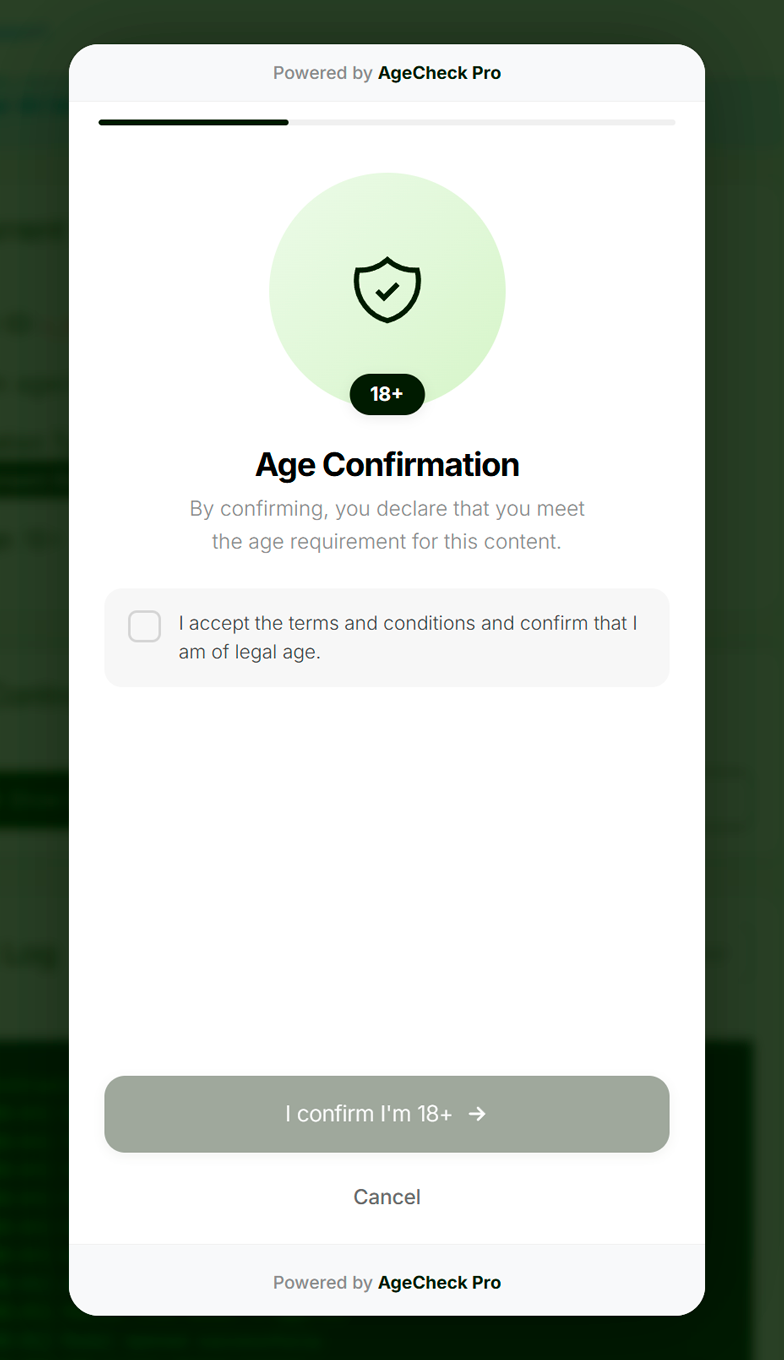
Simple checkbox confirmation for age-restricted content without cameras, documents, or user accounts
Three interactions.
Instant access.
When click-through gates
outperform biometric checks.
Not every age-restricted platform needs biometric verification or document scanning. Content publishers, information sites, and low-liability platforms prioritize maximum audience reach over forensic identity validation. Self-Consent delivers the optimal trade-off: legal protection through attestation with minimal user friction.
How age consent buttons
create legal compliance.
Self-Consent operates on a different legal principle than verification methods. Biometric and document systems attempt to prove the user is actually the age they claim. Self-Consent creates a legal record that the user has attested to meeting age requirements shifting liability from the platform to the individual making false claims.
When a user clicks "I confirm I am 18 or older," they are making a legally binding statement. The platform logs this attestation with timestamp, IP address hash, age threshold, and session identifier. If a minor lies about their age to access restricted content, the platform possesses documentation proving they implemented age controls and the individual circumvented them through false attestation.
This framework works for content platforms where regulations require "reasonable measures" to prevent underage access rather than "absolute verification" of identity. Publishing industries, streaming services, social networks, and information sites typically fall under reasonable measures standards. Self-Consent satisfies this requirement: the platform asks users to confirm age before granting access to restricted material.
The attestation approach also supports terms of service enforcement. When users create accounts or access content, they agree to platform policies including age requirements. The confirmation checkbox creates an explicit record of agreement to these terms. If platform policies are violated, the logged attestation proves the user acknowledged and agreed to restrictions before accessing content.
Regulatory frameworks increasingly recognize that perfect age verification is impossible without creating disproportionate privacy invasion or accessibility barriers. Self-Consent represents the minimum viable protection: asking users to confirm eligibility before providing access, creating audit trails proving the platform exercised due diligence in age gating restricted content.
Where age affirmation
meets regulations.
Self-Consent fits platforms where regulatory frameworks accept reasonable age controls without mandating identity verification, where user experience priorities outweigh forensic assurance needs, and where content access doesn't create high liability exposure from underage participation.
Customize your age gate
and consent flow.
Self-Consent gates are fully customizable to match brand identity, legal requirements, and user experience preferences. Configure text, styling, behavior, and logging through dashboard controls without code changes.
Live in minutes.
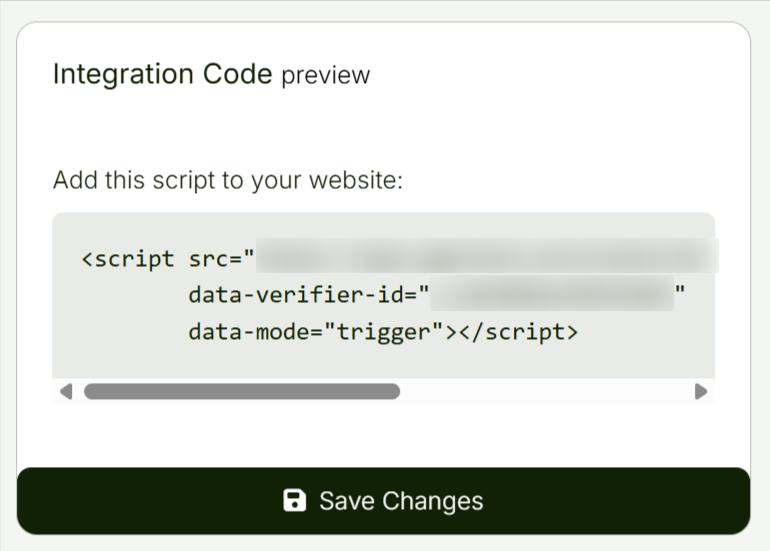
One script tag.
Self-Consent requires minimal technical implementation add a single JavaScript snippet to your site header or through Google Tag Manager. No server-side integration, no API authentication, no complex configuration. The script handles all functionality: displaying gates, managing cookies, logging attestations.
Dashboard configuration means non-technical team members can adjust gate behavior, messaging, and appearance without developer involvement. Marketing teams can A/B test different attestation text. Compliance teams can update legal disclosures. Product teams can modify age thresholds for new content categories. Changes deploy instantly without code deployments.
For advanced use cases, the JavaScript API provides programmatic control. Check verification status before allowing video playback. Show gates conditionally based on user behavior or geographic location. Integrate with existing authentication systems to skip gates for verified users. Fire custom analytics events tracking user interactions with age controls.
The lightweight script (~15KB gzipped) loads asynchronously without impacting page performance. No external dependencies beyond modern browser APIs. Works with all major frameworks and CMS platforms: WordPress, Shopify, Wix, Squarespace, custom React/Vue/Angular applications. Compatible with privacy-focused configurations blocking third-party cookies through localStorage fallback.
Not sure Self-Consent
fits your needs?
Different platforms need different levels of age assurance. Compare all four verification methods to find the right balance between security, conversion, and compliance for your use case.
Still not sure which method fits your platform? Our team can help you choose based on your industry, regulatory requirements, and conversion goals.
Talk to an expert