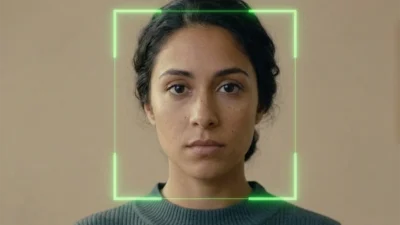
Face AI verifies age from a video selfie in under 10 seconds. No passport scan. No stored biometrics. Here is how it works and whether it is right for your platform.
Here is what happens in most people’s heads when they hear “age verification”: a broken passport upload form, a user rage-quitting the tab, and a conversion rate that does not recover. And they are not wrong to picture that. Most age gates are genuinely terrible they treat every adult like a suspect and demand physical documents that nobody has in front of them at 11pm on a Tuesday.
Here is what most platform operators get wrong: for the vast majority of age-restricted sites, you do not need a document upload at all. A face is enough. Not in a vague, hand-wavy sense in a technically precise, privacy-first, nothing-stored sense.
That is exactly what Face AI by AgeCheckPRO is built around: AI biometric age estimation with active liveness detection. Users smile, turn their head, and they are verified. No document upload. No form filling. No friction that kills conversion rates. This article breaks down how it works, what the numbers look like, and how to decide if it is the right method for your platform.
What is AI biometric age estimation, and how does it actually work?
Face AI uses a neural network trained on millions of verified age samples to analyze facial geometry bone structure, skin texture, facial proportions and estimate whether a user meets a minimum age threshold. The user looks at their camera for a few seconds. The AI returns a pass or fail. That is the complete interaction from the user’s side.
No document. No upload. No waiting for OCR to process a blurry photo of a driver’s license taken in bad lighting. Just a face, active liveness detection, and a result in under 10 seconds.
It is worth being precise about what biometric age estimation means here, because it is different from what most people picture. The system is not building a facial recognition database. It is not creating persistent templates of your users. It analyzes the image, estimates an age range, fires a pass or fail result, and then permanently discards everything. No selfie stored. No facial template retained. Nothing to breach, disclose, or delete on request.
The four-phase verification flow
From the user’s perspective, Face AI feels like pointing at a camera for a few seconds. Under the hood, it is a structured verification pipeline with four distinct phases:
- Phase 1 Device detection: The SDK checks whether the device has a suitable camera. If it does, the session runs in direct mode. If not a desktop without a webcam, for example a QR code is automatically generated so the user can switch to their smartphone.
- Phase 2 Face detection with real-time guidance: A detection loop runs every 500 milliseconds, providing live visual feedback: oval guides, positioning cues, lighting signals. The system waits for the face to be correctly framed before proceeding users are not failing a capture and starting over.
- Phase 3 Active liveness detection: The user follows simple prompts: smile, turn head left, turn head right. These real-time gesture challenges confirm the person is physically present not a printed photo, a pre-recorded video, or a deepfake. Head rotation is analyzed in 3D space. Smile detection measures actual facial muscle movement. Texture analysis identifies pixel grids, moiré patterns, and screen reflections. The default calibration blocks more than 95% of spoofing attempts while keeping the experience simple for real users.
- Phase 4 AI age analysis and result: The neural network analyzes facial geometry, estimates the age range, and fires the result via webhook: pass or fail, age range, fraud score, timestamp. The entire session completes in approximately 10 seconds.
Every session uses single-use tokens that expire after 5 minutes on the QR side. A captured result cannot be replayed to grant access to a second account. Anti-replay protection is built into the session architecture, not added as an afterthought.
No document upload means no document liability
Platform operators often think about age verification risk in one direction: what happens if a minor gets through. The second risk what happens to the data you collected from everyone else gets less attention, and it probably should not.
Every ID scan you collect, every facial template you store, every passport image sitting in a database somewhere is a piece of data you are responsible for. Breaches, deletion requests, disclosure requirements those obligations follow the data. Face AI eliminates that problem at the architectural level.
The privacy architecture works like this:
- Facial images are never stored: Video frames from the liveness challenges are processed in server memory and deleted immediately after AI analysis completes. No photographs persist to disk at any point in the verification flow.
- No biometric templates generated: The AI model does not create facial embeddings or recognition signatures. Each verification is stateless the system cannot identify returning users by their face. This is a deliberate architectural choice, not a limitation.
- IP addresses hashed with SHA-256: User IPs are converted to irreversible SHA-256 hashes before any database storage. Useful for rate limiting and abuse detection; cannot be reversed to identify the original user.
- Age stored as ranges, not exact dates: Verification logs record age ranges (18–20, 21–25, 26–30) rather than exact ages or dates of birth. Audit trail data without precise identifiers.
- No user profiles or cross-site tracking: Each verification is independent. No behavioral analysis. No data aggregation. No correlation across sessions or platforms.
If your infrastructure is breached, there is no biometric database to leak. That is not a marketing claim. It is a direct result of not collecting the data in the first place.
Why AI biometric age estimation converts better than document verification
Document-based verification flows have two fundamental UX problems that design polish cannot solve.
The first is physical friction: users are asked to produce a document they probably do not have in front of them. The second is psychological friction: the implicit message of a passport upload form is “we are going to photograph your ID and keep it somewhere.” Even when that is not what happens, the perception causes abandonment. People close the tab.
Face AI removes both friction points in a single design decision. No document to locate. No upload. No file to worry about. Users smile, turn their head, and they are in.
The numbers reflect this. Document verification sees 40–60% completion as users abandon when asked to photograph IDs. Face AI maintains 85–90% completion rates by removing those friction points. For platforms where conversion directly impacts revenue, that gap is measurable in the bottom line not as a marginal improvement, but as a structural difference in how many users actually make it through the gate.
The SDK also handles the edge cases that quietly kill completion rates in other systems:
- Users without a webcam get a QR code to complete on their smartphone. The desktop widget updates in real time the moment mobile verification completes no page refresh, no manual token entry, no extra clicks.
- Poor positioning or lighting triggers live visual guidance before the capture is attempted, not after a failed attempt that forces the user to restart.
- Liveness detection blocks spoofing without adding steps for real users. The challenge smile, turn head is intuitive, fast, and already familiar from face-filter apps.
Where AI biometric age estimation performs best
The right tool depends on what you are gating and how much friction your users will tolerate. Face AI delivers the optimal balance of assurance and conversion for platforms where users are unlikely to have documents readily available and where completion rates directly affect revenue.
Gaming and esports platforms
Players verifying age for M-rated content or in-game purchases are rarely sitting next to their driver’s license. Face AI lets them verify instantly using their webcam or phone without interrupting the session. For free-to-play or demo areas that require an age check, facial age estimation is the correct starting point with Document AI or Verify AI available for areas that carry higher risk.
Streaming and VOD services
Users streaming adult-rated content on a TV, tablet, or phone are not going to photograph their ID to watch something. Face AI completes faster than finding a wallet. For platforms with free trials, document upload friction kills conversion before users experience the content facial age estimation keeps them in the funnel through the critical first session.
E-commerce for age-restricted products
Online stores selling alcohol, tobacco, or vaping products need a verification that does not derail checkout. Face AI adds approximately 10 seconds to the checkout flow. Document verification adds 2 to 3 minutes. For impulse purchases and subscription boxes, that friction difference is the margin between a completed order and an abandoned cart.
Social apps, dating platforms, and mobile-first communities
Mobile users expect onboarding measured in seconds. Asking for a document upload at signup destroys activation rates on apps where users are already comfortable with face-based features face filters, AR effects, selfie-based profiles. Face AI fits naturally into that experience. The verification feels native, not like a compliance obstacle.
Telegram bots, Discord servers, and messaging platforms
Messaging platforms block camera access inside their embedded browsers, so facial verification cannot run directly in a bot interface. AgeCheckPRO solves this with the QR handoff flow: the bot generates a single-use session link, the user opens it on their smartphone’s native browser, completes the Face AI liveness challenges, and the result is delivered back to the bot via webhook in real time. Full flow: under 30 seconds. Session links expire after 5 minutes and are single-use.
Choosing the right level
AgeCheckPRO offers three verification methods. They are not competing alternatives they are a ladder matched to different risk levels and access scenarios. The same integration supports all three; you switch methods at the configuration level without touching the codebase.
- Face AI AI biometric age estimation with active liveness detection. No document upload. ~10 seconds. 85–90% completion. Best for: gaming, streaming, e-commerce, dating apps, social platforms, messaging bots. The right default for most platforms.
- Document AI OCR extraction from 150+ document types across 56+ countries. Exact date-of-birth confirmation. ~15–30 seconds. Best for: platforms where you need to verify an exact age rather than estimate it, or where the transaction carries higher inherent risk.
- Verify AI Face AI plus Document AI plus biometric face match at 90% similarity threshold. Full audit trail. ~20–40 seconds. Best for: high-stakes identity checks where you need to confirm the person presenting the document is the person in the document.
If your platform does not require an exact date of birth or a full identity match, Face AI is the correct starting point. Adding document scanning when you do not need it is not being more careful it is creating unnecessary friction and data liability that serves no one.
How to add age estimation to your site
The AgeCheckPRO JavaScript SDK loads as a single script tag. You create a Verifier in the dashboard, configure your minimum age threshold, select Face AI as the method, and the modal handles the rest device detection, liveness challenges, AI analysis, result delivery. No camera code to write. No verification logic to maintain.
From the platform’s side, the session lifecycle is:
- Your server calls the API to start a session and receives a WebSocket URL with session credentials.
- The SDK opens the modal on the user’s device and runs the four-phase flow.
- The result fires to your webhook: pass or fail, age range, fraud score, timestamp.
- No selfie reaches your server. No biometric data is retained anywhere in the pipeline.
If a specific section of your platform later requires Document AI or the full Verify AI identity match, you change the method in the configuration. One API key. One webhook endpoint. The Smart Identity Orchestrator handles method selection, session lifecycle, result delivery, and fallback logic from the same integration point.
Face AI answers that question: AI biometric age estimation with active liveness detection, no document upload required, no biometric data stored, 85–90% completion rates, approximately 10 seconds from start to result. For most platforms, that is not just a better age gate. It is the only age gate that actually works at scale without costing you your audience.
AgeCheckPRO is free to start. Self-Consent goes live in five minutes if you need a starting point. Face AI is available on paid plans no credit card required to evaluate. And if your use case grows into Document AI or Verify AI, the upgrade is a configuration change, not a re-integration.